
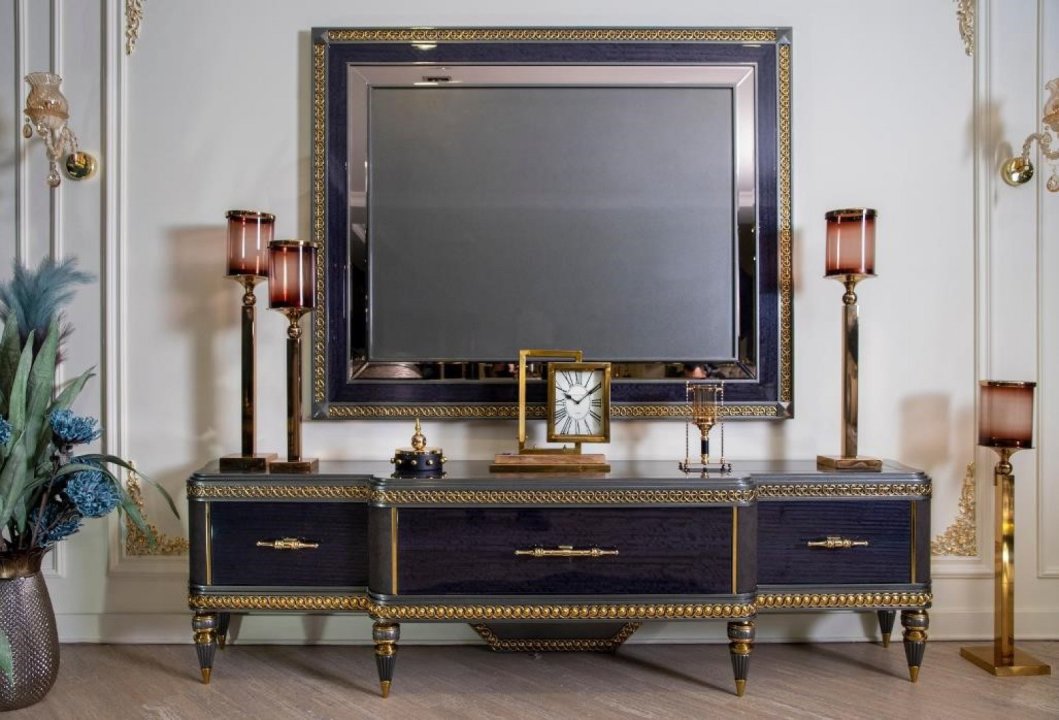
How to Create a Focal Point in the Living Room with a Luxury TV Unit
To create a focal point in the living room with a luxury TV unit, the TV wall should not be treated simply as a place to position the screen. Instead, it should be planned as a complete design zone that brings together furniture, wall finishes, lighting, color, and the other elements of the living room. The TV unit should be proportionate to the size of the room, create the right balance with the television, and look harmonious when viewed from the sofa. The goal is not to fill every surface, but to highlight the design of the unit in a controlled and balanced way.
What Does a Focal Point Mean in a Living Room?
A focal point is the area that naturally attracts the eye when someone enters a room. In a living room, this role can be taken by a fireplace, a large artwork, a window view, or the TV wall.
A luxury TV unit is well suited for this purpose thanks to its strong form, material details, and broad visual surface. However, for the unit to truly become the focal point, the surrounding furniture and decorative elements should not compete with it.
When the sofa set, coffee table, rug, and lighting support the TV area, the visual hierarchy of the room becomes much clearer.
Where Should a Luxury TV Unit Be Positioned on the Wall?
The first step is to identify the wall that provides the most comfortable viewing angle and works best with the furniture layout.
The width of the wall, the position of windows and doors, electrical outlets, internet connections, air-conditioning units, and radiators should all be checked in advance.
Leaving some empty space on both sides of the TV unit prevents the furniture from looking squeezed against the wall. This is especially important for wide or modular luxury TV units, as the surrounding space allows the design to be seen more clearly.
How Should the TV Screen and TV Unit Be Proportioned?
The relationship between the television screen and the size of the lower unit is one of the main factors in creating a balanced TV wall.
If the lower unit is too small compared with the screen, the television may look isolated on the wall. If the unit is excessively large, the screen may become visually secondary.
In general, a piece of furniture wider than the television creates a balanced composition. However, the exact proportion should be determined according to the width of the wall and the design of the unit.
If side cabinets, shelves, or decorative upper modules are included, the whole composition should be considered as one unit.
How Can the Wall Surface Highlight the TV Unit?
The wall behind a luxury TV unit can strengthen the overall character of the furniture.
Plain paint, decorative panels, wood cladding, stone-look surfaces, or wall moldings can be used. The key is to ensure that the wall texture does not become more dominant than the TV unit itself.
A dark TV unit may stand out more clearly against a light, warm-colored wall. With lighter furniture, a slightly darker or more textured background can create a similar effect.
For TV units with strong wood, metal, or decorative details, simpler wall finishes often help preserve visual balance.
How Does Color Contrast Strengthen the Focal Point?
Color contrast is an effective way to distinguish the TV wall from the rest of the room.
For example, in a living room decorated in light beige and cream tones, a dark walnut or espresso-colored TV unit can naturally become the focal point. With light-colored furniture, choosing a wall shade that is a few tones darker can create a similar effect.
However, the contrast should not be limited to the TV wall alone. Repeating the wood or metal details of the unit in the coffee table, floor lamp, or small decorative objects can help maintain visual continuity throughout the room.
How Should the Sofa Set Be Positioned in Relation to the TV Unit?
For the TV unit to function as the main focal point, the primary sofa should have a comfortable relationship with the screen.
The sofa can be placed directly opposite the television or positioned at a slight angle depending on the room layout. The important point is that viewers should not need to turn their heads constantly while watching TV.
If the TV wall already has a strong visual design, the wall decoration behind the sofa can be kept more restrained. This helps prevent the room from having two competing focal points.
How Does the Coffee Table Affect the TV Unit?
Because the coffee table sits between the sofa and the TV unit, it is directly within the main sightline.
For this reason, the height of the table should not block the lower part of the television. Decorative objects placed on the table should also remain below the viewing line.
If the TV unit features straight and angular lines, an oval or round coffee table can create a softer transition within the room. Repeating small wood or metal details from the TV unit on the coffee table can also strengthen the visual connection.
How Can Lighting Be Used to Highlight the TV Wall?
A luxury TV unit does not need to rely only on ceiling lighting.
Low-intensity concealed LED lighting behind the TV, wall sconces, or a floor lamp beside the unit can create a second layer of illumination.
The lighting should not create direct reflections on the television screen. This is particularly important with glossy lacquered, glass, or metal surfaces, where the direction of light should be considered carefully.
When lighting is used to highlight the edges, textures, and material details of the furniture, the TV unit can remain the visual center of the room even in the evening.
How Many Accessories Should Be Used Around the TV Unit?
Creating a focal point does not require a large number of accessories.
In fact, too many objects around the television can distract attention from both the screen and the form of the furniture. A few carefully selected vases, books, or decorative pieces are usually enough.
Not every shelf needs to be filled. Leaving some sections empty allows both the accessories and the furniture design to be seen more clearly.
Larger decorative objects can be placed toward the outer edges of the unit, while smaller accessories can be grouped carefully on shelves or lower modules.
Can a Mirror or Artwork Be Placed Next to the TV Unit?
Yes, but the scale and position should be chosen carefully.
A large artwork can be used next to the TV unit, but it should not compete with the screen in terms of visual weight. A mirror can be used to reflect natural light and make the room feel larger.
However, the angle of the mirror should be checked so that it does not reflect light directly onto the TV screen and reduce viewing comfort.
In rooms where the TV unit is already highly detailed or modular, keeping the additional wall decoration minimal may be the better option.
How Can the Rug Connect with a Luxury TV Unit?
Although the rug does not physically touch the TV unit, it plays an important role in connecting the main color palette of the living room.
With a dark wood TV unit, the rug can include subtle brown or beige tones. For luxury units with metallic details, the rug does not need to be overly shiny or heavily patterned.
Using two or three related tones across the sofa, rug, and TV unit can help the room feel visually connected.
The aim is not to use exactly the same colors, but to ensure that they work together within the same palette.
Why Do Cables and Electronic Devices Affect the Visual Focal Point?
Even if a luxury TV unit has a strong design, visible cables can make the area look untidy.
HDMI cables, power cords, modem connections, gaming console cables, and sound system wires should be concealed behind the unit whenever possible.
If electronic devices are stored in closed cabinets, ventilation requirements should also be considered.
A clean cable arrangement allows the furniture character of the TV unit to stand out more clearly.
Can a Luxury TV Unit Become the Focal Point in a Small Living Room?
Yes. The key is to choose a unit that suits the proportions of the room.
In small living rooms, large systems with tall side cabinets and numerous shelves can make the space feel narrow. Lower, horizontally designed luxury TV units can make the wall appear wider.
By reducing decorative density, a few strong design details can be emphasized more effectively.
Creating a focal point does not always mean using large furniture. The right scale and contrast are often more important.
How Can the TV Wall Be Strengthened in a Large Living Room?
In spacious living rooms, a very small TV unit may appear lost against a large wall.
In this case, complementary pieces such as shelving, display cabinets, or side modules can be added beside the lower unit. However, there is no need to cover the entire wall with storage.
Wall panels, large-scale lighting, or a decorative arrangement placed beside the TV area can help define the boundaries of the composition.
Leaving sufficient empty space on both sides of the TV unit can make the furniture appear even more powerful, even in a large room.
 ARA
 CANLI DESTEK
 HARİTA